
Croatian sword dances
Korčula
The island of Korčula, north of Dubrovnik, is home to two sword dances first recorded in 1620. The first dance is called the Kumpanija and is traditionally performed by sides from several villages in the town of Blato on St. Vincent's day, 28th April. The dance includes flag waving, a linked sword dance and scenes of mock combat and reconciliation. The original dance had 21 figures, and the whole process lasted two to three hours, but modern performances are somewhat abridged! It is still performed today.

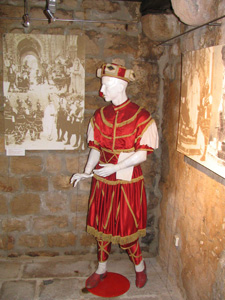
Characters from the Moreška
The other dance, called the Moreška is traditonally performed in Korčula town on St. Theodore's day, 29th July, although it is currently performed weekly during the summer for tourists. It is a combination of play and mock-combat sword dance recreating a battle over the abduction of a princess by the Moors or Turks. The origin is unknown, but it may have been imported from Italy when the Dalmatian coast was part of the Venetian Republic.
Lastovo
Croatia's other native sword dance is from the island of Lastovo, near Korčula on the Dalmatian coast. This dance was part of an elaborate ceremony, called the Pokladari, was traditionally performed on Epiphany, 6th January.
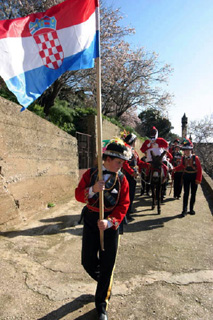
A group of male singers and players of the lirica (a basic local string instrument) in accompany a uniformed straw dummy (the Poklad) brought on the back of a male donkey to the top of the cliffs above the town, which then undergoes a mock execution ritual where it slides down a rope to the town with intermittent explosions from small bombs suspended below it.

When the Poklad lands in the town, it is surrounded by the sword dancers and struck with the swords. This is followed by a sword dance with two rows of dancers starting with clashes of the swords between the rows, followed by dancers being linked in pairs with the swords, then forming a long hilt-and-point chain which snakes around under an arch of swords in a way similar to that of the Italian Fenestrelle and Bagnasco sword dances. The dance is performed with wooden swords due to a law banning real swords in the dance, apparently introduced after a real swordfight broke out during the performance in 1866!
The ceremony is said to celebrate a local legend where Catalan pirates had attacked Korčula and sent a Turkish messenger to demand the surrender of Lastovo. The Lastovars having no intention of surrendering, they fought back while the women prayed to St George for help, which came in the form of a storm destroying the pirates' ships. The Lastovars then paraded the pirates' messenger on the back of a donkey and burned him to death.
The Pokladars' costume is said by locals to have taken elements from the various foreign powers to have governed Lastovo over its turbulent history. The bowler hats are said to have come from the English, the sashes from the French and the flowers from the Venetians.
The ceremony then continues into the evening as a carnival, with a further performance of the sword dance, and the Poklad is ritually burnt towards the end of the evening.
The photographs of the Moreška and the Poklad on this page were sourced from the Wikipedia pages on the Moreška and the Lastovo Poklad respectively, and are copied under the terms of the Creative Commons Attribution-Share Alike 3.0 licence. The photographs may therefore be freely copied for use elsewhere as long as the source is thus credited and the same terms applied.